
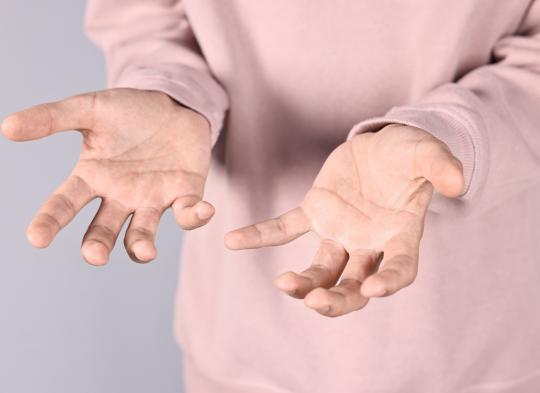
Waking up in the middle of the night due to tingling, pain, or complete loss of sensation in the hand is a common symptom that makes patients to massage or move their hand to restore its function. These symptoms, although initially occasional, may over time occur every night, significantly disrupting sleep and reducing its quality.
In most cases, the first diagnostic for such symptoms is suspected carpal tunnel syndrome (CTS), the most common entrapment neuropathy. However, it is important to remember that nocturnal sensory disturbances in the upper limbs may also have other causes, such as cervical spine disorders or systemic diseases. Precise identification of the cause is crucial, as prolonged compression of nerve fibres leads to progressive hypoxia and irreversible damage.
Why do hands go numb at night?
Many people notice that tingling and numbness in the hands appear mainly or worsen during sleep, while during the day these symptoms are milder or disappear completely. This phenomenon is the result of physiological and biomechanical changes that occur in the body in a lying position.
Body and limb positioning during sleep
During sleep, control over body positioning is reduced, which promotes positions unfavourable to peripheral nerves. Common habits include involuntary prolonged wrist flexion or extension, placing hands under the head, or sleeping on the side with strongly flexed elbows. Such positioning creates direct mechanical pressure on nerve trunks and their blood supply. This results in temporary disruption of electrical impulse conduction and local nerve ischaemia, perceived by the patient as numbness.
Changes in fluid circulation
In the horizontal position, fluid distribution in the body changes. The supine position, combined with nocturnal slowing of heart rate and a physiological drop in blood pressure, promotes venous and lymphatic stasis in the limbs. As a result, mild swelling may develop in the soft tissues of the hands and forearms. Since anatomical canals through which nerves pass (e.g., the carpal tunnel) are narrow and rigid structures, even minimal tissue swelling increases pressure and compresses the nerve tissue.
What does classic carpal tunnel syndrome look like?
Carpal tunnel syndrome develops as a result of chronic compression of the median nerve, which runs from the brachial plexus to the hand. Understanding the anatomy helps explain why this area is particularly vulnerable
Anatomy of the carpal tunnel and mechanism of compression
Carpal tunnel is a narrow passage bounded on three sides by the carpal bones and covered by a rigid fibrous band called the flexor retinaculum. Through this tight space pass nine flexor tendons and the median nerve.
Under normal conditions, pressure inside the tunnel is around 7–8 mmHg. However, with repetitive movements, inflammation, or swelling, tendon thickening may increase pressure several-fold. Because nerve tissue is the most delicate structure in this canal, it becomes compressed, impairing blood supply and blocking normal nerve conduction.
Symptom pattern - the “three and a half fingers” rule
Accurate localisation of numbness is crucial in diagnosis. The median nerve supplies sensation to:
- thumb
- index finger
- middle finger
- half of the ring finger (on the side of the middle finger)
A key feature is the absence of symptoms in the little finger and the other half of the ring finger, which are supplied by the ulnar nerve. If numbness includes the little finger, the cause is unlikely to be carpal tunnel syndrome and may instead originate from the elbow or cervical spine.
Disease progression
In early stages, CTS presents only at night or in the early morning as transient tingling (paraesthesia). As the condition progresses, symptoms begin to occur during the day, especially during activities requiring hand elevation or fine grip, such as driving, holding a phone, or typing. In advanced stages, there is persistent sensory impairment, reduced grip strength, and visible wasting of the thenar muscles at the base of the thumb.
Self-tests you can do at home
Before medical consultation, simple provocation tests used in neurology and orthopaedics can be performed. These are only indicative and require specialist confirmation.
Phalen’s test
This test involves forcing maximum flexion at the wrist joints, which reduces the physical space within the carpal tunnel and increases any existing compression of the nerve.
- Raise your forearms to chest level.
- Press the backs of both hands together, with wrists flexed at about 90°.
- Hold for 60 seconds.
A positive test is tingling, numbness, or pain in the thumb, index, or middle finger within one minute.
Tinel’s sign
This test is based on mechanical stimulation of an irritated and partially hypoxic nerve trunk.
- Extend the arm and turn the palm upward.
- Tap the centre of the wrist where the median nerve passes.
The sign is considered positive if tapping triggers a spreading sensation of tingling or pins and needles radiating directly into the fingers supplied by the median nerve. A healthy, non-compressed nerve does not produce such a response to light tactile stimulation.
Other causes of hand numbness
Although carpal tunnel syndrome is statistically the most common cause of nocturnal hand paraesthesia, tingling and numbness may also be caused by a range of other pathological factors. Proper differential diagnosis must take into account both disorders affecting other parts of the nervous system and systemic conditions.
Cervical spine degeneration and discopathy
One of the most common conditions that can mimic carpal tunnel syndrome are pathologies located in the cervical spine (e.g., intervertebral disc herniation or degenerative bony changes at the edges of the vertebral bodies). These changes may cause direct compression of the nerve roots emerging from the spinal cord and forming the brachial plexus (so-called cervical radiculopathy).
In contrast to carpal tunnel syndrome, numbness caused by cervical spine problems often affects the entire upper limb - pain and tingling radiate from the neck, through the shoulder and forearm, down to the fingers. Importantly, these symptoms also involve the little finger, and their intensity depends on movements or positioning of the head rather than the position of the wrist.
Peripheral polyneuropathy
Polyneuropathy is a generalised, symmetrical damage to multiple peripheral nerves. The most common cause of this condition is long-standing, poorly controlled diabetes (diabetic polyneuropathy), in which elevated blood glucose levels damage both the nerve fibres themselves and the small blood vessels that supply them. Numbness of a polyneuropathic nature typically develops symmetrically in both hands (and
often simultaneously in the feet), producing the characteristic “glove and stocking” pattern of sensory disturbance. These symptoms have a constant intensity and do not improve with changes in hand position.
Vitamin and mineral deficiencies
Proper functioning of the nervous system, particularly the conduction of nerve impulses and the formation of myelin sheaths, depends on the body’s biochemical homeostasis. Night- time numbness in the hands may be a sign of significant deficiencies:
- Vitamin B12 deficiency - causes nerve degeneration and neuropathy
- Magnesium/calcium deficiency - increases neuromuscular excitability, causing tingling and painful cramps during the sleep
Hormonal changes and fluid retention
Transient nocturnal hand numbness very often occurs in women in the third trimester of pregnancy and in patients during menopause. It results from hormonal fluctuations (mainly progesterone and oestrogen levels), which promote excessive fluid retention in the body and the development of tissue swelling.
Swollen soft tissues around the wrists and elbows mechanically compress nerve trunks. In most cases, these symptoms resolve spontaneously after childbirth, or once hormonal balance has stabilised.
When to see a neurologist urgently
Although occasional tingling in the hands at night is often dismissed as a temporary discomfort, there are specific symptoms that indicate an advanced degree of damage to nerve structures.
Warning signs include:
Visible wasting of the thenar muscles
This is one of the most obvious signs of advanced compression neuropathy. Prolonged, severe pressure on the median nerve leads to the degeneration of motor fibres. This manifests as a noticeable flattening of the muscle pad at the base of the thumb (the thenar eminence).
When comparing both hands, asymmetry and a “sunken” appearance of the tissues in the affected hand may be observed. At this stage, the changes may already be difficult to reverse, even after surgical decompression of the nerve.
Loss of fine motor skills and grip strength
Peripheral nerves are responsible not only for sensation but also for precise muscle control. An important warning sign is when a patient begins to experience difficulty performing simple everyday manual tasks, such as fastening shirt buttons, threading a needle, hand-writing, or holding a cup.
Frequent and involuntary dropping of objects from hands indicates significant impairment of motor nerve conduction.
Persistent daytime symptoms
If numbness, tingling, or a “dead” sensation in the fingers is no longer limited to night-time and begins to persist during the day, regardless of activity or limb position, this indicates established nerve ischaemia. Continuous loss of superficial sensation impairs the ability to distinguish textures and temperatures, increasing the risk of accidental hand burns or cuts.
How to relieve symptoms before diagnosis
Before a doctor makes a definitive diagnosis and introduces targeted treatment (depending on the underlying cause), there are safe and effective methods that can help reduce the frequency of waking up at night. These measures are primarily based on eliminating mechanical pressure on the nerves and reducing repetitive strain.
Night splints
The most effective non-pharmacological method in cases of suspected carpal tunnel syndrome is wearing special night splints (so-called wrist orthoses with a palmar splint). Their purpose is to immobilise the joint in a neutral (anatomical) position, i.e. at approximately 0–15 degrees of extension.
This position maintains the lowest possible pressure within the carpal tunnel and prevents involuntary bending of the hands during sleep. The orthosis should be lightweight, well-fitted, and secured with Velcro straps, but it must not compress the forearm, as this could restrict venous blood flow. In many patients, regular use of a night splint provides noticeable relief within just a few days.
Sleep posture adjustment
Together with using orthoses, body positioning in bed should be consciously controlled. Patients suffering from hand numbness should:
- strictly avoid placing their hands under the pillow or under the head, as this creates significant pressure on the median and ulnar nerves,
- avoid sleeping on the stomach and in a tight, curled-up (foetal) position with strongly bent elbows,
- aim to sleep on their back, keeping their arms alongside the body or supported on flat pillows, which improves circulation and minimises the risk of developing venous congestion and swelling.
Workplace ergonomics
Night-time symptoms are very often a direct consequence of overuse to which the upper limbs are subjected during work or daily activities. To reduce nocturnal tendon inflammation, the workstation should be modified:
When working at a computer, the wrists should rest on flat gel pads, and the elbows should be bent at a 90-degree angle. It is worth considering replacing a traditional mouse with a vertical mouse, which encourages a more natural, anatomical forearm position.
People performing repetitive gripping movements (e.g. assembly line work, hairdressing, playing musical instruments) should take a few minutes every hour to perform gentle stretching exercises for the forearm flexor and extensor muscles.
Hands and fingers numbness at night
Ignoring nocturnal hand numbness may eventually lead to loss of full hand function. While home measures and splints can provide temporary relief, they do not address the underlying cause. Early medical diagnosis, often supported by nerve conduction studies (EMG), is essential.
If nighttime tingling regularly wakes you from sleep or daily activities become difficult, do not delay seeking help. At our medical and dental clinic in London, we help patients regain comfort, function, and uninterrupted sleep.
We combine pharmacological treatment and orthopaedic support depending on disease severity. We understand how disruptive chronic pain and numbness can be. We provide convenient appointment times without long waiting lists. Do not let neurological problems limit your daily life and activities. Seek accurate diagnosis and safe treatment.