
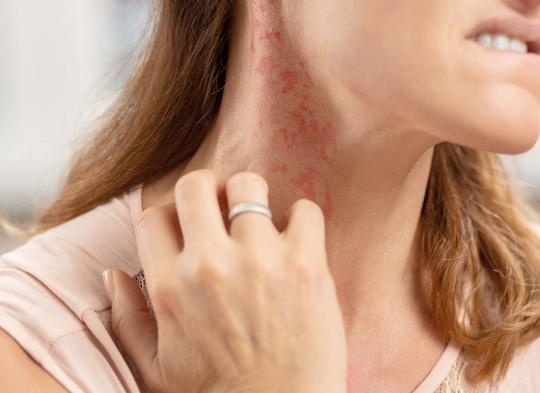
Stress-related rash results from the connection between the nervous system and the skin. This relationship, known as the brain-skin axis, originates from embryology. Both the skin and the nervous system develop from the same embryonic layer, the ectoderm. This shared origin results in the dense innervation of skin tissue and the presence of numerous receptors capable of responding to neuropeptides and stress hormones.
How does stress trigger skin lesions?
To understand how strong emotions manifest on the skin, it is helpful to look at the processes within the body. During periods of intense psychological stress, there is a sudden release of stress hormones, such as cortisol and adrenaline. These hormones stimulate the immune system to react in a way that normally serves as a defence mechanism against threats.
In stress urticaria, however, the immune system responds incorrectly, leading to the activation and degranulation (breakdown) of mast cells located in the skin. As a result, these cells release large amounts of inflammatory mediators into surrounding tissues, the most important of which is histamine. Sudden presence of histamine causes local swelling, dilated blood vessels and significant itching that is difficult to control.
Symptoms of stress urticaria - how to recognise a stress rash
Skin lesions associated with psychogenic urticaria are very characteristic. They appear as urticarial wheals, which resemble blisters caused by direct contact with nettles.
These wheals are slightly raised, usually with a pale, porcelain-white centre surrounded by reddish skin. They most often appear suddenly on areas such as the face, neck, chest, arms, or torso. A very typical feature of urticaria is its highly dynamic nature. A single blister rarely remains in one place for longer than 24 hours. It disappears without leaving a trace, although new lesions may appear elsewhere. Rash is accompanied by intense itching, and sometimes a burning sensation, which itself becomes an additional source of frustration and stress for the patient, creating a vicious cycle of symptoms.
Differential diagnosis and treatment of stress hives
Because stress-related rash looks almost identical to an allergic rash, very important is careful differential diagnosis. Doctor must rule out other potential causes of skin lesions, such as food allergies, contact allergies, reactions to medications, viral infections or thyroid disorders
Treatment of stress urticaria is based on two main pillars. The first one is pharmacotherapy, aimed at quickly relieving troublesome symptoms. Modern antihistamine medications are most commonly used. These drugs block histamine activity, reducing itching and swelling without causing significant drowsiness. Cooling topical compress may also provide temporary relief. The second one is addressing the underlying cause, which involves stress management strategies. These may include relaxation techniques, psychological support, and in some cases mild sedative medications to calm the nervous system.
When should I see a doctor?
Chronic skin problems can significantly reduce quality of life, and persistent itching and visible skin lesions often increase stress, which in turn worsens the symptoms. If you experience recurrent rash and suspect that stress may be the cause, do not ignore the problem or rely solely on home remedies. Proper diagnosis allows other conditions to be quickly ruled out and effective treatment to be introduced. We understand that seeking medical help abroad can be stressful. That is why our Polish clinic in the UK offers full support in your native language. Our Polish GP or dermatologist will carefully assess your symptoms, order the necessary laboratory tests, and select a treatment plan to help restore calm and healthy skin.
Stress hives in children - when emotions appear on the skin
Children, like adults, can experience strong emotional stress, although the sources of stress may differ. Stress hives in children most often occur during periods of major emotional changes, such as adapting to nursery or preschool, difficulties at school, conflicts with peers or any changes in family life (for example moving house or the birth of a younger sibling). Child’s nervous system is still developing and is extremely sensitive to psychological stimuli. In some children this leads to somatisation of stress, meaning that emotional tension manifests through physical symptoms - in this case, an itchy rash.
Clinical picture of urticaria in children is very similar to that seen in adults. Itchy, pale-pink or whitish wheals surrounded by a red halo appear suddenly on the skin. The main difficulty is that children find it much harder not to scratch. Severe itching may lead to irritability, crying, and sleep disturbances, and damaged skin increases the risk of secondary bacterial infections.
In preschool and school-age children, rashes occur very frequently and often have different causes. Skin lesions resembling stress urticaria may result from viral infections (so-called infectious urticaria), food allergies (for example after introducing a new food), or reactions to insect bites. Therefore, diagnosing stress-related urticaria requires ruling out these more common causes.
Treatment usually involves antihistamine medications, often in the form of liquid or drops, which quickly relieve itching and help with comfortable sleep. Cooling skin compress may also provide relief. Equally important is addressing the emotional source of the problem.
Professional support from a child psychologist may be beneficial. Such a specialist can objectively assess the situation and teach your child practical ways to cope with anxiety and frustration. This helps the nervous system process stress differently and reduces the likelihood of stress manifesting through skin lesions.
If you notice a sudden rash in your child that appears during stressful situations, do not delay consulting a specialist. Our Polish GP in the UK will carefully examine your child, conduct a detailed medical interview, and help identify the real cause of the skin lesions while selecting safe and effective treatment.
Stress urticaria - summary
Dealing with sudden, itchy skin lesions can be stressful and often fuels the vicious cycle of the condition, making symptoms worse. Persistent itching, lack of lasting improvement with over-the-counter medications, and the feeling of losing control over the body’s reactions can understandably lead to frustration and anxiety. If the rash regularly appears during periods of emotional stress, proper medical diagnosis is essential to rule out allergies or developing systemic diseases.
We know how exhausting it can be to search for specialist care in an unfamiliar healthcare system, where long waiting times or language barriers can make it difficult to explain complex symptoms. That is why our Polish doctor in the UK provides professional and empathetic support in your native language. Instead of masking the problem with temporary solutions, book a consultation. Our GP or dermatologist will conduct a thorough assessment, order appropriate tests, and choose targeted treatment to effectively stop the problem and restore your daily comfort.