The test is usually ordered by a cardiologist when there is a suspicion of irregular or abnormal heart rhythm or other rhythm disturbances.
Typical indications for the test include:
-
Heart rhythm disorders – diagnosis of palpitations, rapid heartbeat, or irregular heart rhythm reported by the patient;
-
Bradycardia – slow heart rate below 60 beats per minute, to rule out heart block (a disturbance in the conduction of electrical impulses);
-
Ischaemic heart disease – an ECG recording taken during chest pain may provide valuable information for the attending physician;
-
Pacemaker performance assessment – in patients with an implanted pacemaker;
-
Fainting, dizziness, or loss of consciousness – to confirm or rule out cardiac causes.
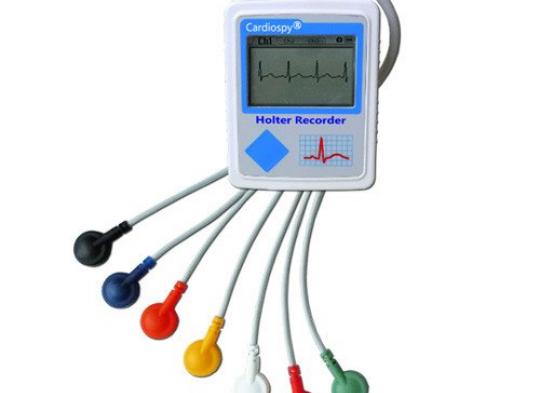
Holter ECG test is a modified version of the standard resting ECG. The difference is that the Holter test records heart activity continuously for 24 hours, rather than for a few seconds as in a standard ECG. During your cardiology visit, disposable electrodes are attached to your chest. The ECG signal is then continuously recorded on a magnetic tape or another data carrier, such as a flash memory card, in a small portable device resembling a walkman. The device is worn in a special pouch that the patient keeps on throughout the entire monitoring period.
Holter ECG does not replace a standard resting ECG. The test lasts for a full 24 hours, and the patient should not limit normal physical activity — the goal is to record heart activity during a typical day (work, daily chores, leisure activities, and sleep).
After 24 hours, the device is removed, and the recorded data are transferred to a computer and evaluated by a specialist.