Gastroesophageal Reflux Disease (GORD)
In highly developed societies, GORD occurs in about 10% of the population. It develops due to the pathological reflux of stomach contents into the esophagus, causing troublesome symptoms and complications.
Table of Contents
- Causes of GORD
- Weakening of the lower esophageal sphincter
- Unhealthy diet
- Smoking
- Stress
- Eating before sleep
- Taking certain medications
- Pregnancy
- Symptoms of GORD
- Heartburn
- Cough
- Excess salivation
- Other reflux symptoms
- How is GORD diagnosed?
- Empirical therapy tests (PPIs)
- Upper endoscopy (gastroscopy)
- Esophageal pH monitoring
- Esophageal manometry
- Barium swallow X-ray
- Impedance testing
- Additional tests (in special cases)
- Laboratory tests
- Treatment of GORD
- Lifestyle changes
- Over-the-counter medications
- Prescription medications
- Surgical treatment
- Home remedies for GORD
- When to see a doctor?
From a doctor’s perspective, GORD is one of the most common conditions encountered in daily practice. Many patients initially perceive heartburn and acid reflux as harmless discomforts, often ignoring or self-medicating without consulting a healthcare professional. Unfortunately, chronic reflux gradually damages the esophageal lining, which can lead to serious complications such as Barrett’s esophagus and even cancer.
In this article, I will describe the mechanisms of reflux formation, its symptoms, as well as the latest diagnostic and therapeutic approaches. I will also emphasize the importance of prevention and lifestyle changes in treatment, because every untreated form of GORD poses a serious health risk.
Causes of GORD
GORD develops when stomach acid refluxes into the esophagus, causing irritation.
The main mechanism is the weakening or dysfunction of the lower esophageal sphincter, the muscle acting as a “valve” between the esophagus and the stomach.
When this valve does not close properly, stomach acid can freely enter the esophagus.
In my daily medical practice, I diagnose GORD most often caused by obesity, pregnancy, or esophageal hypersensitivity. Below are other causes that can lead to reflux:
Weakening of the lower esophageal sphincter
The lower esophageal sphincter can fail its function due to various reasons, such as congenital weakness, aging, or increased abdominal pressure.
Unhealthy diet
Consuming fatty, spicy foods, chocolate, coffee, carbonated beverages, or alcohol can weaken the lower esophageal sphincter or increase stomach acid production, promoting reflux.
Smoking
Nicotine in cigarettes weakens the lower esophageal sphincter and increases stomach acid secretion, worsening reflux symptoms.
Stress
Although not a direct cause, stress can intensify symptoms by increasing stomach acid production and leading to poorer eating habits (e.g., hurried eating or skipping regular meals).
Eating before sleep
Lying down after eating hampers the proper functioning of the sphincter, allowing reflux.
Use of certain medications
Drugs such as non-steroidal anti-inflammatory drugs (NSAIDs), antihypertensives, or some sedatives may weaken the lower esophageal sphincter.
Pregnancy
During pregnancy, increased pressure on the stomach from the growing uterus can cause reflux. Hormonal changes also weaken the sphincter’s function.
Symptoms of GORD
Apart from heartburn, GORD can cause a range of other symptoms:
- burning sensation in the chest, often called heartburn. Usually occurs after eating and can worsen at night or in a lying position.
- regurgitation of food or acid into the throat.
- upper abdominal or chest pain.
- swallowing difficulties, called dysphagia.
- sensation of a lump in the throat.
- general malaise.
- bad breath.
- bloating and belching.
People experiencing nighttime reflux may also suffer from persistent cough, laryngitis, or even asthma.
Heartburn
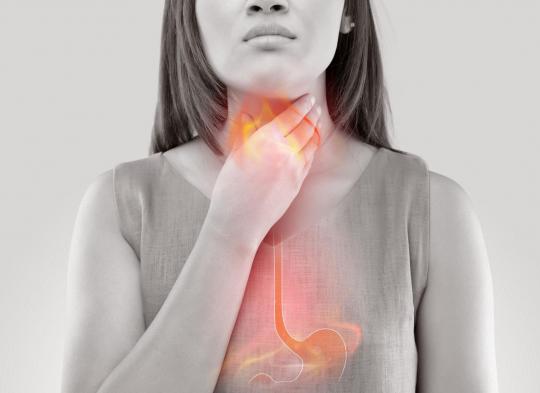
The most common symptom of GORD is heartburn (acid indigestion). It is usually a burning pain behind the breastbone, which starts at the sternum and moves upwards to the neck and throat. Many also experience reflux of gastric contents into the mouth, leaving a sour or bitter taste.
Burning, pressure, or pain associated with heartburn can last up to 2 hours. Symptoms often worsen after eating. Lying down or bending over may trigger heartburn. Many feel better when standing upright or taking acid-
neutralizing medications.
Pain caused by heartburn can be mistaken for heart pain or a heart attack, but there are some differences:
- Heart pain related to heart disease worsens with exertion and eases with rest.
- Heartburn pain is less likely to be activity-related.
- If in doubt, especially with chest pain, immediate medical attention is necessary to rule out cardiac issues.
Cough
Excess stomach acid in the esophagus and throat can cause coughing. Other symptoms may include:
- Wheezing
- Hoarseness
- Pulmonary congestion
- Excessive salivation
Stomach acid can stimulate salivary glands, leading to increased saliva production, especially during reflux of gastric contents.
Other reflux symptoms include:
- Nausea
- Bad breath
- Breathing problems
- Difficulty swallowing
- Vomiting
- Erosion of tooth enamel
- A lump in the throat
How is GORD diagnosed?
Diagnosis of GORD is based on both patient-reported symptoms and diagnostic tests, which confirm reflux and assess possible injury to the esophageal lining.
The first step is a detailed medical interview, during which the doctor gathers information about the nature, frequency, and severity of symptoms such as heartburn, regurgitation, and chest pain.
Below are key diagnostic methods:
Empirical therapy tests (PPIs)
A commonly used method is empirical therapy. The doctor may recommend taking proton pump inhibitors (PPIs) for a short period (e.g., 2 weeks). If symptoms improve, it suggests GERD. This is a simple way to confirm diagnosis without invasive procedures.
Gastroscopy (Upper GI endoscopy)
This fundamental diagnostic test allows the doctor to directly assess the mucosa of the esophagus, stomach, and duodenum. During the procedure, a thin endoscope with a camera is inserted through the mouth, enabling detection of inflammation, erosions, ulcers, and Barrett’s esophagus, which can result from reflux. Biopsies may be taken if necessary.
pH monitoring of the esophagus
This specialized test measures acid levels in the esophagus over 24 hours. A thin probe is inserted into the esophagus, recording pH changes at various times during the day and night. It confirms the presence and severity of acid reflux.
Esophageal manometry
This assesses the muscle function of the esophagus, including the lower esophageal sphincter, which may be responsible for reflux. It measures the strength and coordination of esophageal muscle contractions to identify any dysfunction.
Barium swallow X-ray
In some cases, the doctor may order a barium X-ray, which highlights the shape and function of the esophagus and stomach. It can help detect a hiatal hernia, often associated with GORD.
Impedance testing
This test measures the flow of liquids and gases through the esophagus, allowing assessment of non-acid reflux—regurgitation of food contents that does not lower pH but may produce similar symptoms.
Additional tests (in specific cases)
For patients with recurrent respiratory infections, hoarseness, or chronic cough, reflux may cause extraesophageal symptoms. Additional assessments, such as ENT or pulmonology exams, can help evaluate whether reflux affects other systems.
Laboratory tests
While blood tests do not confirm reflux, they can help evaluate overall health and detect complications such as anemia caused by chronic bleeding from erosions.
Final diagnosis of GORD is based on a combination of medical history, physical examination, and diagnostic results. Early diagnosis is crucial to prevent complications and enable effective treatment.
Treatment of GORD
The treatment depends on symptom severity and underlying causes. Its goal is to reduce acid reflux, protect the esophagus from damage, and improve quality of life. Therapy may include lifestyle modifications, medications, and in some cases, surgery.
Lifestyle changes:
- Avoid large meals; eating smaller portions more frequently reduces stomach pressure and reflux.
- Elevate the head during sleep; sleeping with the head raised by 10-15 cm can reduce nighttime reflux.
- Avoid eating within 2-3 hours of bedtime.
- Weight loss; reducing excess weight, especially around the abdomen, decreases stomach pressure.
- Avoid triggering foods: caffeine, alcohol, chocolate, high-fat foods, and carbonated drinks.
- Quit smoking; nicotine weakens the lower esophageal sphincter, promoting reflux.
Over-the-counter medications:
Common OTC treatments include antacids (e.g., Maalox, Rennie), which neutralize stomach acid quickly, providing relief. Proton pump inhibitors (PPIs), like omeprazol or esomeprazol in lower doses, can be purchased OTC and effectively reduce acid production.
Prescription medications:
Stronger medications include high-dose PPIs such as omeprazol, esomeprazol, pantoprazol, or lansoprazol, used for longer periods to promote healing and prevent complications. H2 receptor antagonists (e.g., ranitidine, famotidine) may also be prescribed.
Surgical Treatment
When medications and lifestyle modifications do not lead to improvement, and the patient suffers from a severe form of reflux or complications such as Barrett’s esophagus, surgical options are considered.
The most commonly performed procedure is fundoplication, which involves wrapping the upper part of the stomach around the lower esophageal sphincter, strengthening its function and preventing acid reflux.
There are also minimally invasive techniques, such as endoscopic closure of the esophagus, which help reinforce the lower esophageal sphincter.
Home Remedies for GORD
Home treatment of GORD aims to reduce reflux or minimize damage to the esophageal lining. As a doctor, I frequently recommend over-the-counter or prescription medications to relieve symptoms. Herbal remedies, avoiding fatty foods, and eating smaller portions with deliberate prolonged chewing to avoid overfilling the stomach can also provide relief.
Some patients use supplemental therapies, such as aloe vera and probiotics. Aloe gel can soothe gastrointestinal irritation, while probiotic supplementation supports proper digestive system function and reduces symptom severity.
When to See a Doctor for GORD?
Understanding the causes of GORD is crucial for effective treatment and prevention. Proper lifestyle changes, weight control, and avoiding risk factors can significantly improve quality of life and prevent the development of serious complications. Successful treatment usually involves a combination of appropriate medications and lasting changes in daily habits.
It is important that patients with persistent symptoms despite treatment consult a doctor for an accurate diagnosis and further management.
If you experience persistent reflux symptoms that affect your quality of life, do not delay visiting a specialist. As a physician, I understand how bothersome GORD can be, but proper treatment and lifestyle adjustments can greatly improve your well-being. Each case requires an individual approach, so I encourage you to schedule a consultation at our Polish clinic in Coventry. Together, we will develop a treatment plan to help you regain full health and comfort.
All content on this website is the intellectual property of Poland Medical Clinic. Copying, reproduction, or dissemination in whole or in part, in any form or manner without the administrator’s permission, is prohibited; any unauthorized use will be considered a violation of copyright laws.