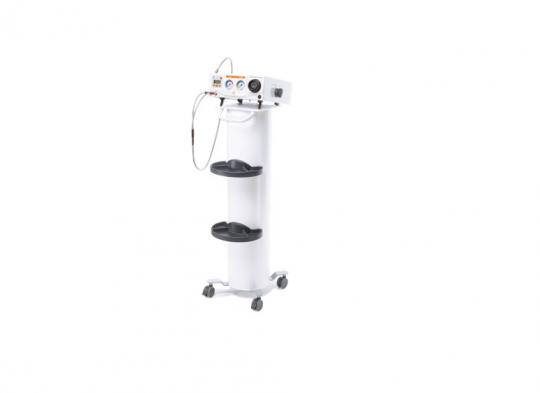
Cryotherapy (cryosurgery) is a treatment that involves the local, controlled destruction of tissues by freezing them. Over the past three decades, cryosurgery has developed rapidly and become one of the most common minor surgical procedures used to treat skin conditions. Cryosurgical devices use liquefied gases known as cryogenic liquids. The most commonly used gases include liquid nitrogen, nitrous oxide, and carbon dioxide.
The origins of general cryotherapy date back to ancient Egypt. Early mentions of cold therapy – which is essentially what cryotherapy is – can be found in the writings of Hippocrates, who believed that cold treatment helped reduce pain and stop bleeding. Today, local cryotherapy is primarily used for the removal of skin lesions and the treatment of certain superficial cancers.
There is a wide range of conditions that can be treated with cryotherapy, with the method and intensity adjusted to the patient’s needs and the type and severity of skin lesions.
Local cryotherapy is very commonly used in dermatology, mainly because of its simple and minimally invasive nature. It can be performed as a one-off procedure or in cycles, depending on the patient’s condition. Cryotherapy can be safely used at almost any age, as the list of contraindications is very short – primarily because the treatment is localised. The procedure is usually performed in dermatology clinics, typically without the need for local anaesthesia, as it is painless and bloodless, making it especially suitable for children.
Compared to other treatment methods, complications after cryotherapy are rare – the risk is much lower than, for example, after surgical excision. Immediately after the procedure, some patients may experience mild redness or discomfort, while late complications such as secondary infections are extremely uncommon.
After treatment, the patient can go home immediately and recover there. A small scab naturally forms at the treated site and falls off after some time. The healing time depends on the depth and extent of the treated area. One of the main advantages of cryotherapy is that it leaves minimal or no scarring.
Indications for Cryotherapy
Viral infections:
-
Viral warts
-
Genital warts (condylomata acuminata)
-
Molluscum contagiosum
Skin cancers and precancerous lesions:
-
Basal cell carcinoma
-
Squamous cell carcinoma
-
Bowen’s disease
-
Erythroplasia of Queyrat
-
Adenoid cystic epithelioma
-
Actinic keratosis
-
Leukoplakia
-
Cutaneous horn, keratoacanthoma
Benign skin lesions:
-
Mucous cyst
-
Facial granuloma
-
Pyogenic granuloma
-
Sebaceous adenoma
-
Fibroma
-
Sweat gland adenoma
Vascular lesions:
-
Cherry angioma
-
Cavernous haemangioma
-
Spider angioma