
From a medical point of view, it is a natural stress test for carbohydrate metabolism and pancreatic function. As pregnancy progresses, body tissues become less sensitive to insulin in order to ensure a constant supply of glucose to the foetus. This is a physiological phenomenon, but the line between normal adaptation and disorders such as gestational diabetes can be very thin.
For many patients, it is important to distinguish whether they are dealing with insulin resistance that existed before pregnancy, often associated, for example, with polycystic ovary syndrome (PCOS), or with disorder resulting from placental hormones. Stable glucose levels are essential for proper foetal development and help reduce the risk of complications such as macrosomia and pre-eclampsia. In this article, we explain why regular blood glucose monitoring is so important and how modern diabetic care helps women safely navigate this metabolically demanding period.
Physiological insulin resistance in pregnancy – role of placental hormones
Understanding changes in carbohydrate metabolism during pregnancy requires a closer look at the role of the placenta. This organ does far more than simply transport nutrients. It acts as an active endocrine gland that gradually takes control of the mother’s metabolism. From the second trimester onward, the placenta begins producing hormones that affect how the woman’s body uses glucose.
Their purpose is to ensure a constant supply of energy to the developing foetus. The most important role is played by human placental lactogen (hPL). This hormone reduces mother’s tissue sensitivity to insulin, leading to higher blood glucose levels. As a result, the baby receives a stable energy source regardless of the intervals between meals. The effects of hPL are strengthened by other hormones produced during pregnancy:
- progesterone and oestrogens — reduce tissue sensitivity to insulin,
- cortisol — its natural increase stimulates glucose production in the liver,
- placental growth hormone — further modifies cellular responses to insulin.
In a healthy woman, the pancreas is able to respond to these changes by increasing insulin production several-fold. Problems arise when insulin secretion reserves are insufficient to compensate for the increasing resistance. In such cases, blood glucose levels begin to exceed normal ranges, leading to a diagnosis of gestational diabetes.
Insulin resistance increases as the placenta grows, reaching its peak between the 24th and 28th week of pregnancy. This is why the standard glucose tolerance test is performed during this period to assess whether metabolic adaptation is progressing normally.
Gestational Diabetes (GDM) – definition and risk factors
Gestational diabetes is a disorder that develops for the first time during pregnancy. It does not necessarily mean that the expectant mother had diabetes beforehand - rather, her body is unable to keep up with insulin production once placental hormones begin to strongly influence metabolism. Since pregnancy naturally lowers tissue sensitivity to insulin, in some women this physiological change develops into a condition requiring treatment.
It is important to understand who is at greater risk of developing GDM. Early identification of risk factors allows blood sugar control to begin sooner and helps avoid complications for both mother and baby.
Factors that increase the likelihood of gestational diabetes include:
- Maternal age - risk increases after the age of 35.
- Higher pre-pregnancy body weight - a BMI above 30 is one of the most significant risk factors.
- Previous history - previous gestational diabetes or giving birth to a baby weighing over 4 kg.
- PCOS - polycystic ovary syndrome is often associated with insulin resistance before pregnancy.
- Hypertension - either pre-existing or developing during pregnancy.
- Family history - type 2 diabetes in parents or siblings.
It is worth remembering that GDM can still occur even if none of these factors apply. For this reason, every pregnant woman should undergo screening tests. It is a simple way to detect abnormalities early and support a safe pregnancy.
Diagnosis during pregnancy – Oral Glucose Tolerance Test (OGTT)
Standard screening for gestational diabetes is performed in every pregnant patient between the 24th and 28th week of pregnancy. This timeframe is not accidental as during this period placental hormonal activity places the greatest strain on the mother’s metabolic system. Detecting abnormalities at this stage allows appropriate treatment to begin before elevated blood sugar negatively affects foetal growth.
The oral glucose tolerance test (OGTT), commonly referred to as the “glucose curve test,” is highly sensitive diagnostically. Its purpose is to evaluate how the body responds to a sudden intake of a large dose of carbohydrates over a strictly defined period. At our clinic in London, we ensure that the entire process runs smoothly and comfortably - from preparation for the test to discussing the results and next steps. Patients receive clear guidance and the opportunity for prompt consultation with a doctor. This makes diagnostic testing a natural part of pregnancy care rather than a stressful obligation.
Impact of uncontrolled blood glucose on foetal development and pregnancy
When an expectant mother’s blood sugar levels remain too high for an extended period, this directly affects the baby. Glucose crosses the placenta freely, and excessive levels force the foetal pancreas to work intensively. The baby’s body begins producing large amounts of insulin — a condition known as fetal hyperinsulinism. This state is responsible for most complications associated with gestational diabetes.
Macrosomia – when the baby grows too quickly
In a foetus, insulin acts as a powerful growth hormone. Excessive insulin leads to accelerated fat accumulation and enlargement of internal organs. As a result, the baby may reach a birth weight exceeding 4–4.5 kg.
Such a high birth weight increases the risk of delivery complications, including shoulder dystocia, and more often leads doctors to consider caesarean delivery.
Complications during pregnancy
Poorly controlled blood glucose affects the entire environment in which the baby develops. It may lead to:
- Polyhydramnios - elevated foetal glucose levels increase urination, resulting in excess amniotic fluid and a higher risk of premature contractions.
- Premature placental ageing - disturbances in microcirculation may weaken placental function and affect oxygen delivery.
- Pre-eclampsia - women with GDM are more likely to develop pregnancy-induced hypertension.
Challenges after birth
After the umbilical cord is cut, the baby’s supply of glucose from their mother suddenly stops, but the infant’s pancreas may still produce large amounts of insulin. This can lead to a rapid drop in the newborn’s blood sugar levels during the first hours of life. For this reason, babies born to mothers with GDM require close neonatal observation.
Blood glucose in pregnancy influences child’s future health
Research shows that the environment in which a foetus develops can also affect health later in life. Children exposed to chronic hyperglycaemia in the womb are more likely to struggle with obesity, insulin resistance, and type 2 diabetes in adulthood.
For this reason, good glycaemic control during pregnancy is not only about ensuring a healthy pregnancy, but it is a real investment in the child’s long-term health.
How to maintain healthy blood sugar levels during pregnancy - diet, exercise and daily monitoring
Diagnosis of gestational diabetes does not automatically mean a difficult delivery. In most cases, stabilising blood sugar levels is possible through changes in daily habits.
Low Glycaemic Index (GI) diet
The goal of this diet is to avoid sudden spikes in blood glucose after meals. Helpful strategies include:
- complex carbohydrates - wholegrain bread, groats, brown rice,
- large portions of vegetables - preferably raw or lightly cooked,
- low-GI fruit - such as blueberries, raspberries, and green apples,
- regular meals - 5–6 smaller portions daily without long breaks.
Physical activity
Moderate physical activity helps lower blood sugar because working muscles use glucose independently of insulin. The simplest and most effective option is a 30-minute walk after main meals. Physical activity should always be discussed with the supervising doctor.
Blood glucose monitoring
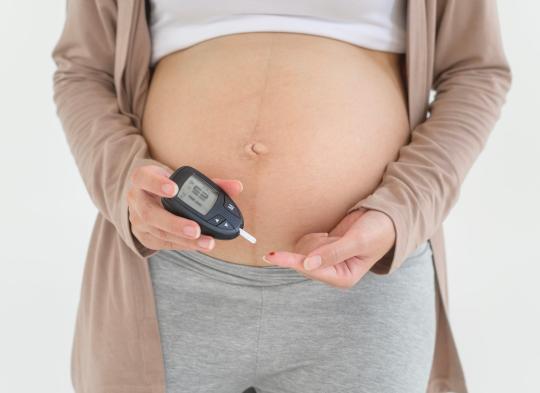
Regular monitoring helps patients understand how their body responds to food and physical activity. Blood glucose is usually checked in the morning while fasting and one hour after main meals. This is a simple but highly effective tool that helps detect abnormalities quickly and adjust dietary habits accordingly.
When is insulin needed?
If blood sugar levels remain too high despite dietary changes and physical activity, a doctor may recommend insulin therapy. This is a safe treatment option because insulin does not cross the placenta, its purpose is to stabilise the mother’s blood glucose levels.
Diabetology and Obstetric care at our London practice
At our London clinic, we support expectant mothers throughout every stage of pregnancy, including cases involving gestational diabetes. Our Polish- and English speaking team combines diabetology care, regular laboratory testing, foetal growth ultrasound scans, and practical dietary support. We understand that a diagnosis of GDM can be stressful, which is why we focus on clear communication, education, and continuous patient support. Our goal is to keep blood sugar levels under control so pregnancy can progress more smoothly and with less unnecessary stress.