
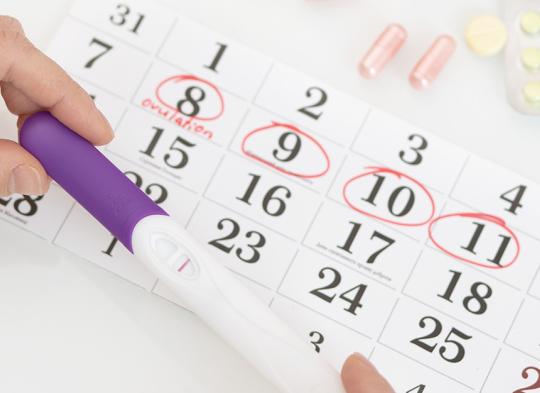
The calendar method, also known as the rhythm method, has long been of interest to women seeking natural ways of family planning. It is based on the assumption that it is possible to identify fertile and infertile days in the menstrual cycle, helping to avoid pregnancy. Its popularity mainly comes from the fact that it does not require hormonal intervention, does not generate costs, and allows women to better understand their own bodies. But can tracking the cycle really be an effective form of contraception?
In this article, we will analyse how the method works, who it may be suitable for, and how effective it is compared to other forms of contraception.
What Are the Methods of Contraception?
Contraceptive methods can be natural or artificial. Thanks to the development of the pharmaceutical industry and increased knowledge about women’s hormonal balance, it is now possible to consciously choose the pregnancy-prevention method that aligns with the lifestyle, worldview, and individual needs.
What Are Natural Methods of Contraception?
Natural contraception methods are family-planning techniques that do not require the use of hormonal, chemical, or mechanical measures. They rely on observing natural signs of female fertility – such as body temperature, cervical mucus, or menstrual cycle length – to identify fertile days and avoid intercourse during that time.
Natural methods are most often chosen by people in stable, long-term relationships, such as marriage. Their advantages include the absence of side effects, but they require regular observations, accuracy, excellent knowledge of the body, and significant self-discipline for daily measurements and notes.
Natural contraception methods include:
- sexual abstinence
- the temperature method
- the mucus method
- the Billings method
- the calendar (rhythm) method
Many people consider withdrawal a form of contraception. This is incorrect. Why? Sperm capable of fertilising an egg are present not only in semen but also in pre-ejaculatory fluid – the colourless liquid released during sexual arousal.
Interestingly, natural family-planning methods are becoming more popular. However, it is important to remember that natural contraception has a low Pearl Index compared to pharmacological or chemical methods – meaning its effectiveness is lower.
What Is the Pearl Index?
The Pearl Index is a numerical measure indicating how many pregnancies occur despite using a given method of contraception. The effectiveness of a contraceptive method depends on many factors, including self-discipline, the partners’ health, and the quality of the contraceptive used. For this reason, two numbers are often quoted (effectiveness with perfect use and with typical/incorrect use).
The index refers to a group of 100 sexually active women. For example, the Pearl Index for condoms is 2–15, meaning that 2 to 15 women out of 100 became pregnant despite using this popular contraceptive.
For the calendar method, the index is 5 and 25.
Only spermicide has a lower effectiveness – 6 with perfect use and 26 with typical use.
Calendar (Rhythm) Method – How Does It Work?
Calendar method is undoubtedly the most popular natural method of contraception and also one of the oldest known family-planning techniques. It is recommended primarily for women in long-term relationships with the same partner. One requirement for its effectiveness is observing menstrual cycles for at least one year. It is also recommended mainly for women with consistent, regular cycles. The menstrual cycle consists of several phases:
- menstruation – begins on the first day of bleeding, lasting 3–7 days. If the egg was not fertilized during the previous cycle, the sudden decline in progesterone and oestrogen, along with the breakdown of the corpus luteum, leads to the shedding of the endometrium (uterine lining), which is expelled from the body as menstrual blood.
- follicular phase – the pituitary gland releases FSH, stimulating follicle development, endometrial regrowth, and increased uterine blood supply. These processes create favourable conditions for a potential embryo, which then has the opportunity to implant in the uterus. The follicular phase lasts 14 to 17 days.
- ovulation – a surge in oestrogen and LH causes the release of an egg, which waits in the fallopian tube for fertilisation; ovulation lasts 1 day. If fertilization does not occur during this time, the oocyte degenerates.
- luteal phase – if fertilization occurs during ovulation, the corpus luteum begins to produce progesterone and oestrogens (the latter in smaller amounts). Additionally, the body starts producing human chorionic gonadotropin (hCG). In the absence of fertilization, however, the corpus luteum degenerates, leading to menstrual bleeding. The luteal phase lasts on average 14 days.
How Is the Calendar Method Used?
Calendar method involves identifying fertile and infertile days based on cycle length to avoid intercourse during periods of highest pregnancy risk. One year of cycle tracking allows a woman to estimate average cycle length and identify fertile days. To determine the first fertile day, subtract 18 from the number of days in the shortest cycle.
Example:
Shortest cycle: 28 days
28 – 18 = 10
This means the 10th day after the beginning of menstruation is a fertile day.
However, ovulation is not the only day when pregnancy can occur. Unprotected intercourse in the few days before and after ovulation may also lead to fertilisation – sperm can survive in the female reproductive tract for 2–3 days.
A typical menstrual cycle lasts 28–35 days and is controlled by oestrogen, progesterone, FSH, and LH.
Advantages of the Calendar Method
- no hormonal, chemical, or mechanical interference
- no impact on libido
- safe for the body
- no side effects linked to artificial contraception (such as weight gain, vaginal dryness etc.)
- improved understanding of natural bodily processes
- aligns with religious values
- no financial cost
Disadvantages of the Calendar Method
- lower effectiveness than artificial methods – Pearl Index approx. 25
- low effectiveness for women with irregular cycles
- no protection against STIs
- many factors affect effectiveness (stress, illness, travel, climate changes)
- requires meticulous record-keeping
This method is not recommended for women not in stable relationships or those with casual sexual partners, as the risk of unwanted pregnancy and STIs increases. Combining the Calendar Method with
Other Techniques (Temperature and Mucus)
While the calendar method relies solely on cycle length, its effectiveness increases significantly when combined with other natural fertility-awareness methods – most commonly the temperature method and the mucus (Billings) method.
Temperature Observation
The temperature method involves regularly measuring body temperature at the same time each day, with the same thermometer, and from the same location. A noticeable temperature rise (not caused by illness) indicates ovulation. The following 3 days should also be considered fertile.
Cervical Mucus Observation
Cervical mucus changes throughout the cycle.
- During infertile days: less mucus, sticky, “dry days”
- Approaching ovulation: mucus becomes wetter and glossy
- During ovulation: mucus becomes stretchy, slippery, egg-white consistency – the “peak”
The 3 days following the peak are also considered fertile. Using these methods together – the sympto-thermal method – significantly improves the accuracy of identifying fertile and infertile days. Interestingly, fertility signs include increased libido.
Mother Nature has designed female fertility so that sexual desire peaks during the fertile days. As ovulation approaches, women often feel more energetic, focused, and vibrant. Skin, hair, and nails also tend to be at their best, all of which contributes to a heightened sense of attractiveness.
This makes sense from an evolutionary perspective: an attractive, confident female is more likely to draw a mate, increasing the chances of passing on her genes and strengthening the group.
Which Contraception Method Should You Choose?
Choosing the right family-planning method should be tailored to each woman individually. Several factors must be considered, including chronic conditions that can affect hormonal balance.
Natural methods are best for couples planning pregnancy soon. Artificial methods (pills, IUDs, patches, condoms, rings, etc.) are recommended for women who want to postpone pregnancy or avoid it altogether. Natural methods, including the calendar method, may work better for older women who know their cycles well. They are not recommended for very young women beginning their sexual activity.
The best way to choose the optimal method of contraception is to visit a gynaecologist.
At our clinic, experienced gynaecologists in London and Coventry will advise you on the most suitable contraceptive method. Based on your medical history, lifestyle, and preferences, they will help you select the best option. Today the choice is truly wide, and a doctor can explain the advantages and disadvantages of each method.