
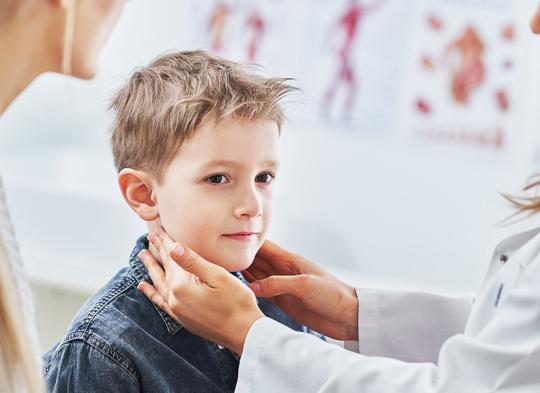
Dry and productive coughs can keep any parent of a young child awake at night. They are especially common during the low-immunity season, between autumn and winter, and most often affect children attending nurseries and preschools. Many infectious diseases (mainly spread via droplets) present with inflammation of the throat.
A healthy throat is essential for your child’s wellbeing. It affects sleep, concentration, appetite and immunity. Recurrent infections, snoring or difficulty swallowing are signs that should not be ignored. In this article, we explain how to take care of your child’s throat and what to look out for.
What should a healthy throat look like in a child?
A healthy child’s throat is light pink, without redness, coating or swelling. Tonsils are small, symmetrical and not enlarged, and the back of the throat is smooth, without visible lumps, pus spots or redness.
If you notice symptoms like red throat, white coating, painful swallowing, bad breath, fever or enlarged lymph nodes – this may indicate an infection such as tonsillitis, viral pharyngitis or enlarged tonsils. In such cases, it is worth consulting a paediatric ENT specialist.
In our Polish clinics in London and Coventry, we offer specialist ENT consultations for children, in Polish or English, without stress or long waiting times.
How to check if your child has a sore throat?
The first signs of a throat infection in children are often pain when swallowing, refusal to eat or drink, hoarseness, cough or fever. Child may be irritable, sleepy or complain of a “scratchy” throat. Take a look inside the mouth – if the throat is very red, tonsils enlarged, and white patches or pus spots are visible, this may indicate tonsillitis or another infection.
In young children, symptoms may be less obvious. Pay attention to extensive crying, drooling, refusal to swallow, and even ear pain, which often accompanies throat infections.
The most common throat conditions in children
Throat infections are very common in children and are a natural part of building immunity. Frequent infections are due to the immaturity of the immune system and should not cause excessive worry. Generally, the older the child, the less frequently they fall ill, although this depends on how many infections they have already been exposed to.
The most common throat conditions in children include:
- acute pharyngitis,
- chronic pharyngitis,
- tonsillitis (acute inflammation of the throat and tonsils).
Acute pharyngitis
The main cause of acute pharyngitis in children are viruses, responsible for around 80% of cases. The remaining cases are caused by bacteria and fungi. Symptoms usually appear 2–5 days after infection.
Acute pharyngitis has a much more intense course than its chronic form. Typical symptoms include:
- sore throat,
- dry cough,
- fever – usually not exceeding 39°C,
- muscle and joint pain.
Less commonly, symptoms include a runny nose and diarrhoea. Acute pharyngitis requires pharmacological treatment, sometimes including antibiotics. Without treatment, there is a risk of abscess formation and the spread of the infection to other parts of the upper respiratory tract, such as the larynx, lungs or bronchi.
Chronic pharyngitis
As with the acute form, chronic pharyngitis is mainly caused by viruses. It may, however, also be a symptom of childhood diseases such as rubella, chickenpox or measles. It can also be a consequence of untreated allergies or gastro-oesophageal reflux disease.
During the autumn-winter season, a major problem is spending long time in heated indoor spaces with low humidity. This causes rapid drying of the nasal and throat mucosa, significantly reducing their natural defence mechanisms against harmful pathogens.
Symptoms of chronic pharyngitis include:
- hoarseness,
- dryness in the throat,
- dry or productive cough,
- reduced appetite,
- irritability and tearfulness,
- swollen throat mucosa,
- slightly elevated temperature (low-grade fever, usually not exceeding 39°C).
Symptoms depend on the underlying cause, and so does treatment. ENT Surgeon or paediatrician must tailor therapy to the cause. Treatment may include antibiotics and anti-inflammatory or analgesic medications. Hydration and rest are also essential.
Tonsillitis
Tonsillitis, more precisely - acute inflammation of the throat and tonsils, most commonly affects children aged 3 to 14. The most frequent cause is infection with Group A beta-haemolytic streptococci (streptococcus pyogenes). The pathogen spreads through droplets (direct contact with secretions when an infected person coughs or sneezes near the child) and by touching contaminated personal items.
Symptoms can last up to two weeks.
There is also a viral form of tonsillitis, which usually lasts up to 7 days.
Symptoms of tonsillitis include:
- severe sore throat,
- high fever,
- purulent coating on the tonsils (or clear exudate in viral tonsillitis),
- difficulty swallowing,
- enlarged lymph nodes.
Treatment depends on whether the cause is viral or bacterial. In most bacterial cases, appropriately selected antibiotic therapy is crucial, and its aim is to stop growth of harmful bacteria and reduce risk of complications. The most commonly used antibiotics are penicillin, cephalosporins, amoxicillin, clindamycin or azithromycin. Viral tonsillitis is treated mainly with anti-inflammatory and pain-relief medications.
How to keep child's throat healthy
It is impossible to completely prevent throat infections in children. However, following doctors’ recommendations can significantly reduce the risk. Here are the most important preventive measures:
Provide healthy diet
A well-balanced diet supports the development of natural immunity. It should include vitamins A, C, D3, essential fatty acids (EFAs), as well as iron and calcium found in fresh fruit and vegetables, oily fish, dairy, whole grains and fermented foods. Limit processed foods, simple sugars and trans fats. If your child is very selective with food, consider supplementation.
Our clinic also offers nutritional advice and diet consultations.
Humidify the air
Low air humidity causes drying of the respiratory mucosa. The optimal humidity level is 40–60%. You can achieve this by placing water containers on radiators or using air humidifiers.
Avoid overheating rooms
A common mistake parents make is overheating children’s rooms. High temperature contributes to low humidity. The room should not be warmer than 21°C during the day and 19–20°C at night.
Keep your child hydrated
Fluid needs depend on body weight. According to the Holliday-Segar method:
- a 2-year-old needs around 1000–1200 ml/day,
- a 4-year-old around 1300 ml/day,
- a school-age child around 1500 ml/day.
Ensure drinks do not contain caffeine or sugar. The best choices are still mineral water and herbal teas.
Never give medication (especially antibiotics) without consulting a doctor
A common mistake is giving medicines “just in case” or not following medical instructions. Stopping antibiotics too early or using old medications can cause antimicrobial resistance and prolong treatment.
Avoid contact with sick individuals
Whenever possible, avoid exposing your child to ill individuals. Young children are more prone to infections due to an immature immune system.
Limit exposure to tobacco smoke and air pollution
Passive smoking suppresses immune cell activity and contributes to pathological vascular changes. Smog and pollutants damage respiratory epithelium, weaken defence mechanisms and worsen asthma or COPD symptoms.
Avoid walks on high-pollution days and choose greener areas such as forests. Do not open windows during peak pollution times. If possible, use an air purifier with a HEPA filter.
Teach healthy habits
Children should learn to wash their hands regularly after coming home, after using public spaces, etc. It’s also important to teach them to cover their mouth and nose when coughing or sneezing. Adjust the way you explain these habits to your child’s age.
Do not ignore recurrent throat infections, snoring or swallowing problems in your child as these are signs that may require specialist assessment. In our Polish medical clinics in London and Coventry, we offer comprehensive ENT care for children, provided by experienced doctors in a friendly and safe environment. Consultations in Polish or English help children feel more at ease and allow parents to better understand the treatment plan.