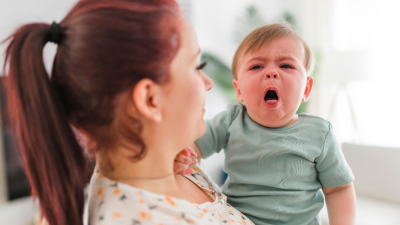
A runny nose and a mild cough in a baby may look like a common cold, and for the first few days that is often exactly what they are. The problem begins when these symptoms are caused by RSV, which in very young children can develop into a much more serious lower respiratory tract infection.
You can read about other common infections in babies in our article “The Most Common Illnesses in Infancy”.
How RSV Infection Starts
Symptoms usually appear 4–6 days after infection. During the first 2–3 days a child may have a runny nose, a mild cough and sometimes a slightly raised temperature, generally feeling quite well. However, in babies and children under the age of 2, the same virus can spread to the lower respiratory tract and cause bronchiolitis, which may require hospital treatment.
Warning Signs – When to Call 999 and When to Call 111
Call 999 (or go to A&E) if you notice any of the following in your baby:
- very pale, blue or grey lips or skin (on brown or black skin, these changes may be easier to see on the palms of the hands),
- difficulty breathing – grunting noises when breathing, long pauses in breathing (apnoea), or their tummy sucking under their ribs,
- a temperature below 36°C,
- your baby is floppy and do not wake up or stay awake.
Call NHS 111 (you can ask for a Polish interpreter) or arrange an urgent GP appointment if your child:
- is unwell and is getting worse,
- is feeding or eating much less than usual,
- has had a dry nappy for 12 hours or longer, or has other signs of dehydration,
- feels hotter than usual (especially on their back or chest), is sweating or shivering,
- is under 3 months old and has a temperature of 38°C or higher,
- is over 3 months old and has a temperature of 39°C or higher,
- is very tired or irritable,
- has cold-like symptoms and also has a long-term medical condition (such as a heart or lung condition) or a weakened immune system.
If your baby has any of the symptoms listed under 999, do not wait or try to make your own way to hospital - call for emergency help. If your baby has any of the symptoms listed under 111, do not wait - call 111 or contact your GP.
Treatment – Why There Is No Antiviral Medication
There is no antiviral medication that treats RSV – treatment is supportive: offering smaller amounts of fluid more frequently, keeping the baby in a more upright position while sleeping and feeding, and, for fever or pain, giving paracetamol from 2 months of age or ibuprofen from 3 months of age and provided the baby weighs at least 5 kg. NICE does not recommend routine nasal suctioning – it should only be considered if secretions are making it difficult for the baby to feed or breathe. Monitoring the baby's breathing is more important than medication alone.
Prevention
The virus can survive for up to an hour on hands and for several hours on door handles or toys, so frequent handwashing is a key preventive measure. However, the most important protection is vaccination during pregnancy: at 28 weeks of every pregnancy, or soon afterwards, the NHS offers the Abrysvo vaccine free of charge, helping to protect the baby for approximately the first 6 months of life. In addition, since autumn 2025, babies born before 32 weeks of pregnancy and children in high-risk groups have been offered a single injection of antibodies (nirsevimab, Beyfortus) for the RSV season, which runs from September to February.
Frequently Asked Questions
How can you tell RSV from a common cold during the first few days?
At first, it is often difficult to tell the difference because the symptoms are identical. A sign that it may be something more than a common cold is worsening breathing after 2–3 days, rather than cold symptoms that simply persist.
Does every child with RSV need to go to hospital?
No - most children experience RSV much like a common cold. Hospital treatment is mainly required for babies with the warning signs listed above, particularly those under the age of 2.
Is RSV protection available for every baby?
Yes - every baby can receive protection through mother's vaccination during pregnancy (Abrysvo, available free of charge through the NHS from 28 weeks of pregnancy). In addition, nirsevimab is given to babies born before 32 weeks of pregnancy and children in high-risk groups.
Medical information correct as of 29 September 2026. This article is for information purposes only and is not a substitute for medical advice - each individual situation should be discussed with a doctor.
Consult a Polish Paediatrician in London
If your baby has any of the symptoms listed under 999 or 111 above, use the appropriate NHS pathway first. If you are unsure whether your baby's symptoms are simply a common cold, our paediatricians see patients in Harrow and Coventry, with same-day appointments available.
Photo: rawpixel / 123RF